Where does it take place?
 |
 |
WHAT'S ON Printing date: 28/11/2026 11:41:43 |
| Arrival date: 28/11/2026 Departure date: | |
|
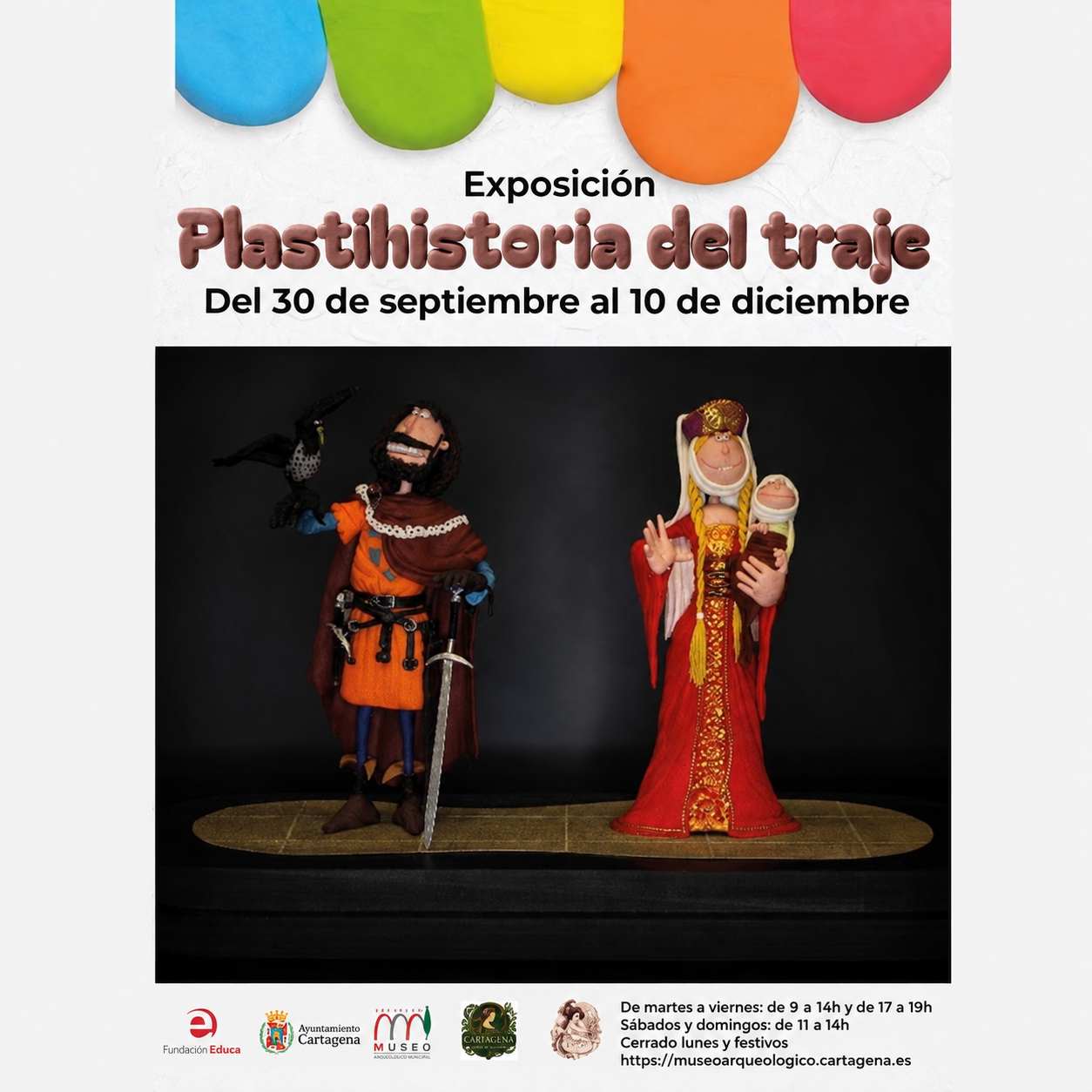
PLASTIC HISTORY OF COSTUME Exhibition
30/09/2026 - 10/12/2026 The Plastic History of Costume is a journey through the history of fashion told with modeling clay. The exhibition is organized into 22 scenes with a chronological overview of fashion history, from the beginnings of leather tanning, through Prehistory, Egypt, Greece, the Roman Empire, the Middle Ages, the Renaissance, the Baroque period, 18th-century France, 19th-century fashion, various tools such as the spinning wheel, the sewing machine, and the loom, the 20th century, urban tribe fashion, and current 21st-century fashion. |
|
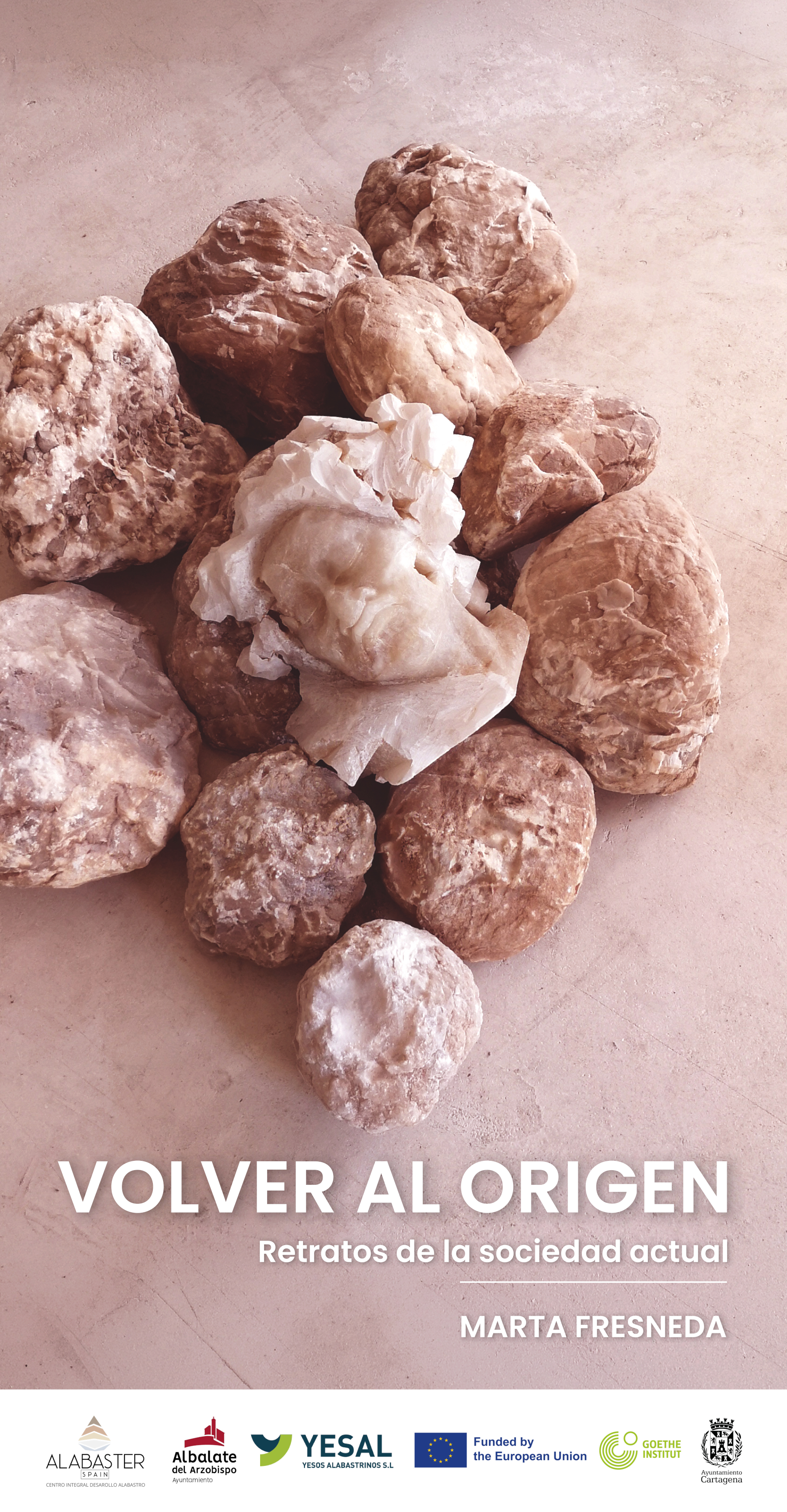
EXHIBITION: 'RETURNING TO THE ORIGIN' Marta Fresneda. Sculptures. CC Luzzy
02/10/2026 - 08/01/2027 “RETURNING TO THE ORIGIN” Marta Fresneda. Sculptures Carlos Gallego Hall. Ramón Alonso Luzzy Cultural Center until January 9, 2027 Returning to the Origin proposes a sensory, ethical, and visual journey that begins with the introspection of contemporary humanity and culminates in a call to collective action. This monographic exhibition comprises thirty-one sculptural works. The exhibition space, organized around the articles of the Universal Declaration of Human Rights, creates a carefully curated route through the galleries, harmoniously and visually inviting. The architectural features allow visitors to explore the stories, emphasizing each one, all within a holistic perspective, with an inclusive narrative adapted to all audiences. The works invite a silent dialogue with the lives they represent, generating an immersive, reflective, and profoundly human experience. Marta Fresneda Gutiérrez was born in Seville in 1984, where she earned a Bachelor of Fine Arts degree, specializing in sculpture. After graduating, she received the Leonardo Scholarship at the Artù Bronze Foundry in Fiesole, collaborating with international artists. Following an extended period in Italy, she continued her studies at the Accademia di Belle Arti in Florence, specializing in set design and sculpture for the theater. Room schedule: 9:00 AM / 9:00 PM Monday - Friday Saturdays: mornings from 09:30 to 13:30 |
|
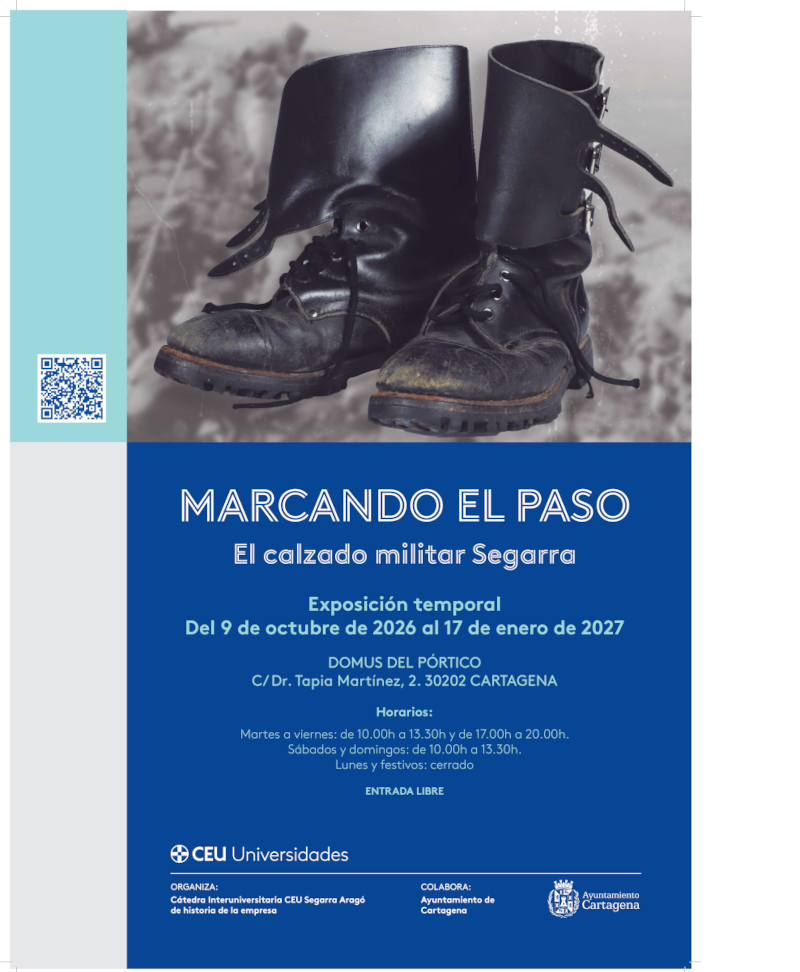
EXHIBITION: `SETTING THE TIME` Segarra Military Footwear. Domus Room of the Portico
09/10/2026 - 16/01/2027 “SETTING THE TIME” Domus del Pórtico Hall until January 17th. Segarra military footwear is the result of research being carried out by the The exhibition consists of a hundred original pieces, including not only espadrilles, shoes, boots and some military uniforms, but also utensils, craft tools, work machinery, advertising items, business documentation or period photographs, all from private collections. The proposal is structured in two parts. The first is dedicated to presenting the company: its chronological milestones, organizational and production systems, and its social achievements. The second part explores the full range of military footwear produced by the company, from the first espadrilles used for everyday agricultural work and by soldiers who fought in the African and Philippine wars of the 19th century, to the boots and uniform shoes of the various branches and corps of the Spanish Army, Navy, and Civil Guard in the last century. "The exhibition reflects how this company emerged, which from 1882 to 1979 manufactured all the footwear worn by the Spanish Armed Forces, not only the army, but also the police and firefighters, but fundamentally the intention was to reflect that connection with the army through the manufacture of the footwear that soldiers need," explained Mónica Ruiz Bremón, curator of the exhibition and professor at CEU San Pablo University. The proposal arrives in Cartagena after having been exhibited in other parts of the country, such as the Institute of
|
|
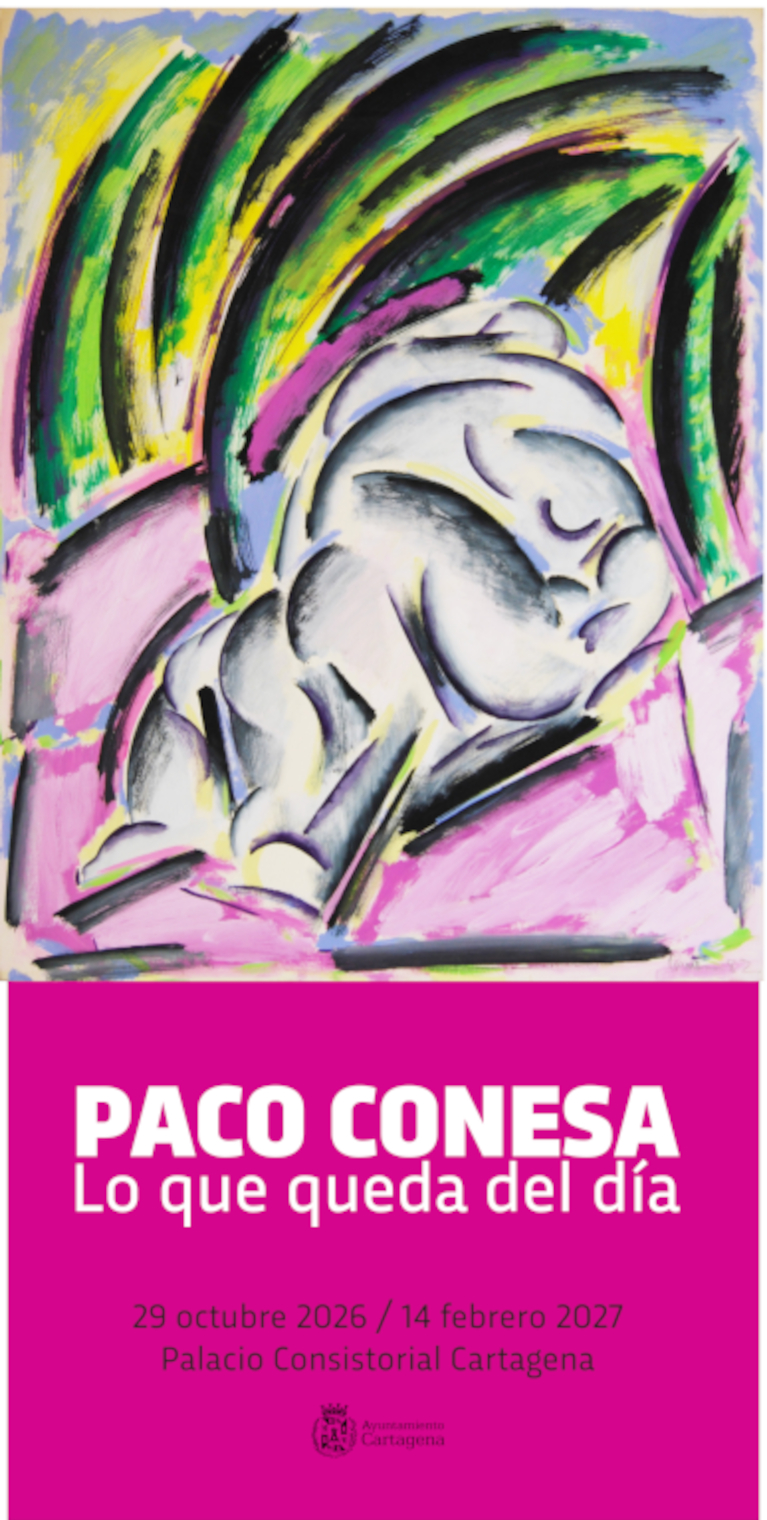
EXHIBITION: 'What Remains of the Day' by Paco Conesa. Town Hall Hall
29/10/2026 - 14/02/2027 What's left of the day Paco Conesa “What remains of the day” is born from an intimate gesture and, at the same time, profoundly generous on the part of the artist's heirs: to open the study of Paco Conesa, painter from La Unión (Murcia), and explore what Silence fell after his death. Among accumulated folders of drawings for decades and rolled-up fabrics that still retain the trace of the gesture, A universe emerges that speaks not only of an artistic trajectory, but of a way of being in the world. Far from being conceived as a comprehensive review—a task that will fall to future historians—, this exhibition proposes a free, almost wandering, following the traces of his work. A conscious wandering through fragments, intuitions and findings that allow us to glimpse the complexity and coherence of his pictorial language. For this, three creators from different generations, Julia Bermúdez — direct disciple of Conesa— Martín Lejarraga and Ángel Mateo Charris, have assumed the role of mediators. Their perspective, necessarily subjective, delves into the legacy not as someone who organizes an archive, but as someone who Listen, select, and discuss. In this process, personal memory, the Admiration and aesthetic conversation intertwine, giving rise to a open and vibrant narrative. The result is an exhibition that does not intend to close anything, but rather to open everything up. On the contrary: to open up questions. What remains of an artist when their work Does it remain scattered? What stories are activated when other creators approach their traces? How is a shared memory built from fragments? Before this collection of materials dissolves into the sands of time, This exhibition offers one last chance to stop, look, and let go. To question the work of Paco Conesa. Also to show the scaffolding he provided. giving rise to his aesthetic corpus and his achievements in the field of stage design, especially in the world of theater in Galicia, and religious imagery, of which is evidenced by his works for Holy Week in La Unión. And above all, his relationship with the body, especially the male model, central axis of his painted work, which positions him as a representative of queer culture the last few decades. Visiting hours: Monday: Closed Tuesday to Friday: morning 10:00-13:30. afternoon 17:00-19:00 Saturdays: morning 10:00-13:30. afternoon: 17:00-20:00 Sundays: morning 10:00-13:30. Afternoon closed Holidays: tomorrow 10:00-13:30. |
|
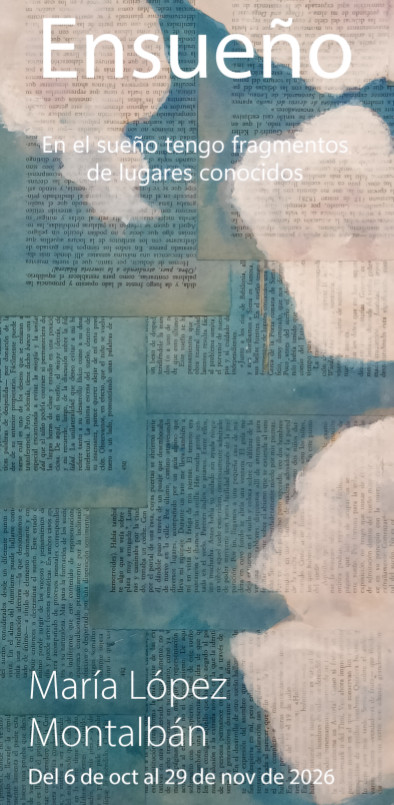
EXHIBITIONS: 'DREAMER' by María López Montalbán. DORA CATARINEU GALLERY
06/10/2026 - 29/11/2026 From October 6 to November 29 in the Dora Catarineu room ROOM SCHEDULE:
“Daydream” is a painting project initially conceived for the La Concepción neighborhood of Cartagena as part of the “Our Neighborhood Essence” initiative. The project's central focus is to highlight specific spaces and architectural features of the neighborhood, blending them with a dreamlike vision that invites us to daydream. In our current history of war and genocide, present on a global scale, defending our dreams on a micro level and renewing our commitment to daily life through the shared landscape is another way to work towards harmony, reciprocity, unity, and good neighborliness. This proposal aims to highlight the beauty of the everyday, the spaces we inhabit and their hopeful presence, emphasizing through them their reality, what they are, and also their possibilities of being and functioning as springs of new proposals for relating to the environment. María López Montalbán. I was born in the spring of '68 in Cartagena. I grew up in Madrid, where I studied Theology. Around '98, I moved back to Cartagena, the place of my roots. Once there, I joined the Espartaco Café-Bookstore project. Later, I joined the team at the Carmen Conde Adult Education Collective, a leading educational institution in the city of Cartagena; there I developed as an educator. I have spent most of my professional life as an instructor and coordinator for various groups in the region. Painting has been a part of my life for as long as I can remember, ceramics since I entered the Popular University of Cartagena, and sculpture since I decided to pursue a dream and left teaching to become a student at the Murcia School of Art, where I completed the module in Plastic Arts and Design Applied to Sculpture. |
|
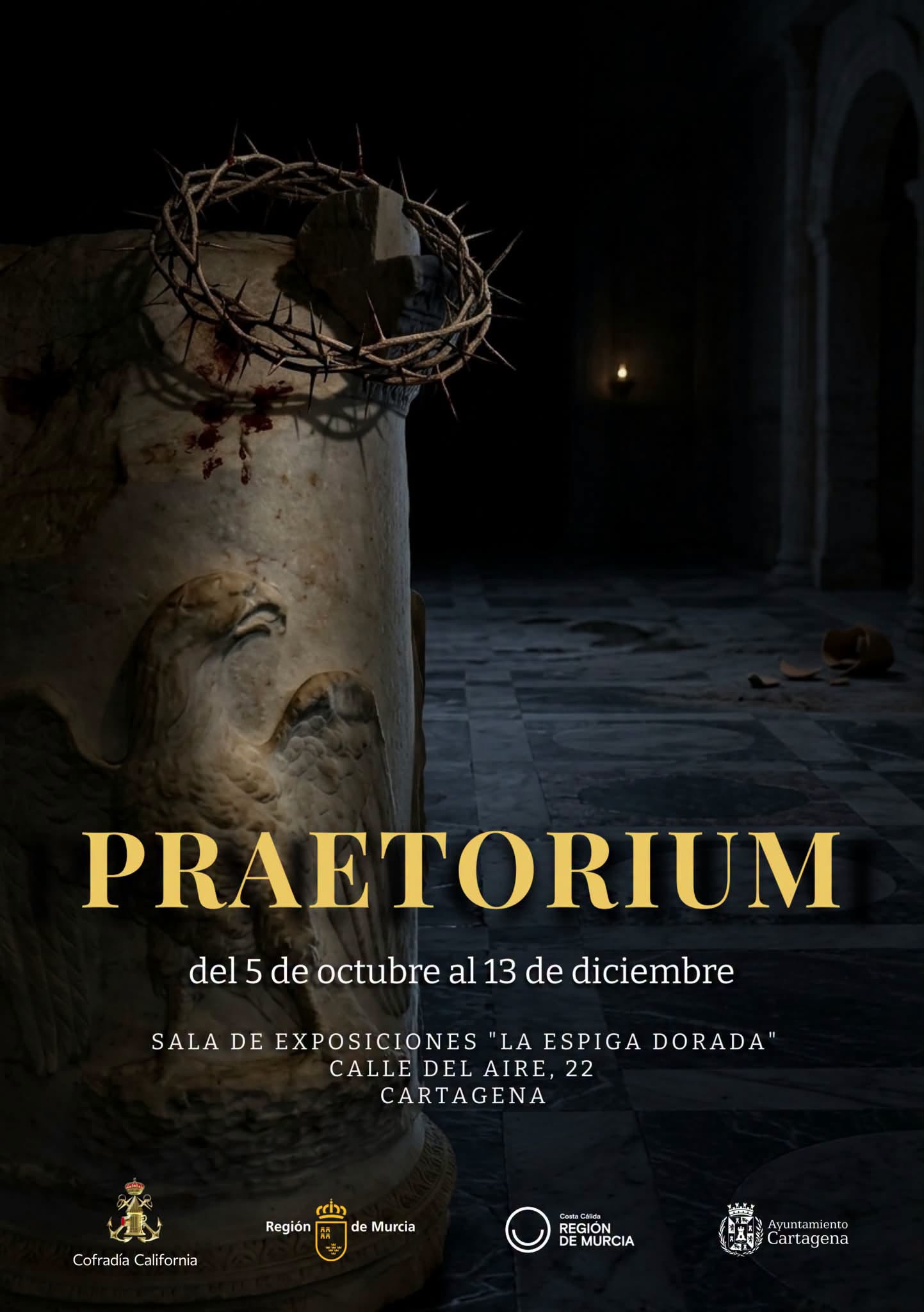
Exposición 'Praetorium' (Sala La Espiga Dorada)
09/10/2026 - 13/12/2026 La imaginería del Levante español se convierte en protagonista en Cartagena hasta el 13 de diciembre con la exposición Praetorium. Un camino hacia Jesús prendido, una muestra organizada por la Cofradía California que reúne en la sala La Espiga Dorada obras procedentes de Cartagena, Murcia, Lorca y Caravaca de la Cruz para ofrecer un recorrido artístico por distintos momentos de la Pasión de Cristo. Entrada libre.
La exposición, que estará abierta hasta el próximo 13 de diciembre, permite contemplar de cerca, y a la altura del visitante, algunas de las piezas más representativas de la Semana Santa del sureste español, poniendo en diálogo obras de diferentes épocas, autores y tradiciones en torno a un mismo hilo argumental, como es el prendimiento y el proceso de Jesús hasta la sentencia de Pilato.
El recorrido se inicia con el Cristo Maniatado de Caravaca de la Cruz, obra del siglo XVII de Fray Nicolás de Bussy, y continúa con piezas que representan diferentes episodios de la Pasión, como Jesús ante Caifás, la Negación de San Pedro, el Santísimo Cristo de la Flagelación, la Coronación de Espinas, el Cristo de la Paciencia y la Sentencia de Jesús.
La selección permite reunir en un mismo espacio obras de maestros de la escultura religiosa como Nicolás de Bussy, Nicolás Salzillo, Damián Pastor, Mariano Benlliure, Gregorio Molera, José Hernández Navarro y José Antonio Navarro Arteaga, entre otros.
La exposición reúne así el patrimonio de distintas cofradías y hermandades de Cartagena, Murcia, Lorca y Caravaca de la Cruz, ofreciendo una visión conjunta de la riqueza artística y cultural de la Semana Santa de la Región.
HORARIO
Where does it take place?
|